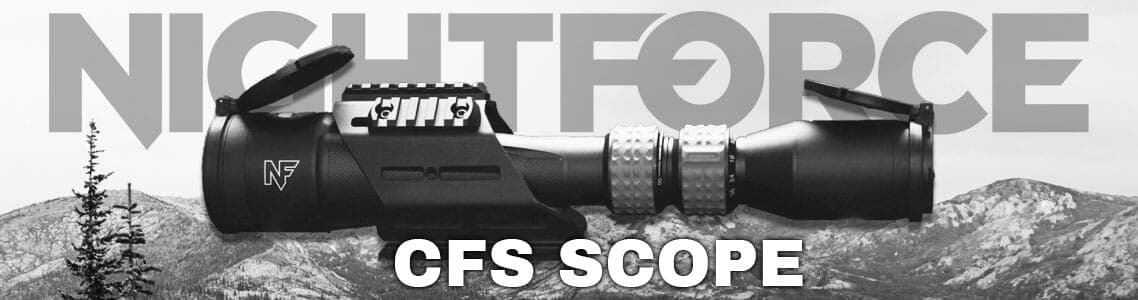
Nightforce Configurable Field Spotting (CFS) Scope
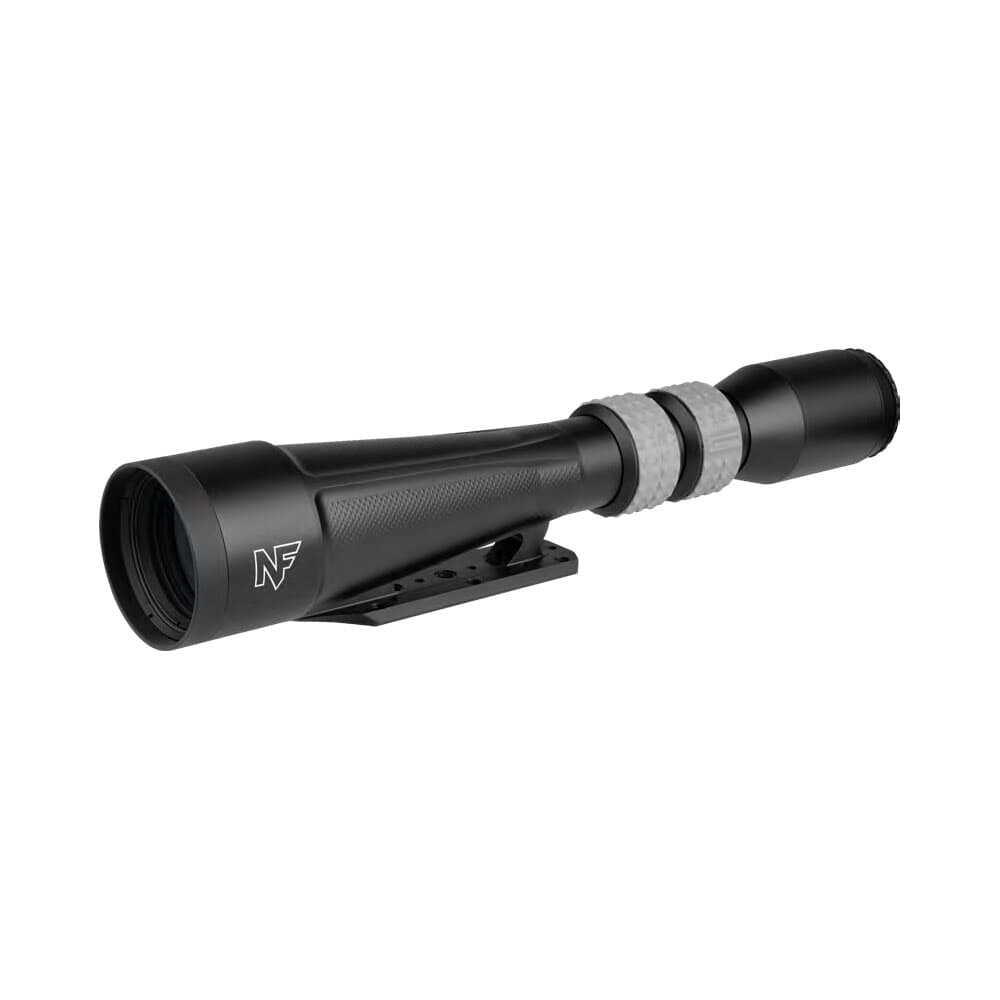
Most spotting scopes are built for watching. The Nightforce Configurable Field Spotting (CFS) Scope is built for working alongside a shooter. It’s a 6-36x50 straight-body spotter with a first focal plane reticle. That lets your spotter read wind, call corrections and range targets in the same units your rifle scope uses. It’s 14.1 inches long and weighs 33.7 ounces, so it packs down like a large riflescope, not a bulky angled spotter.
Built for the Field
The Nightforce Configurable Field Spotting design keeps all the controls in the middle of the body. One rubberized ring handles magnification. The other handles focus, with a 120-degree throw that takes you from 20 meters to infinity in a single turn. You won’t be spinning the focus over and over while a target is up.
The base is an integrated 1.5-inch dovetail built to the RRS standard. It clamps straight into most Arca-Swiss tripod heads with no plate needed. A 50mm objective gives you a 5.8mm exit pupil at 6x, which keeps the picture bright at first and last light.
Each scope comes with a padded field case, flip-up lens caps, a lens cloth and a Torx wrench. Nightforce impact-tests the CFS to the same standard as its riflescopes.
The Reticles
Every Nightforce CFS has a first focal plane reticle, so its holds stay true at any magnification. You can choose from three.
The MIL-XTs is based on Nightforce’s Mil-XT riflescope reticle, for shooters who think in mils. The MOA-XTs is the same idea in MOA. The TReMoR4 is a Horus grid spotting reticle with wind dots, designed to pair with TReMoR3 and TReMoR5 scopes.
Scope Only or Cage Kit
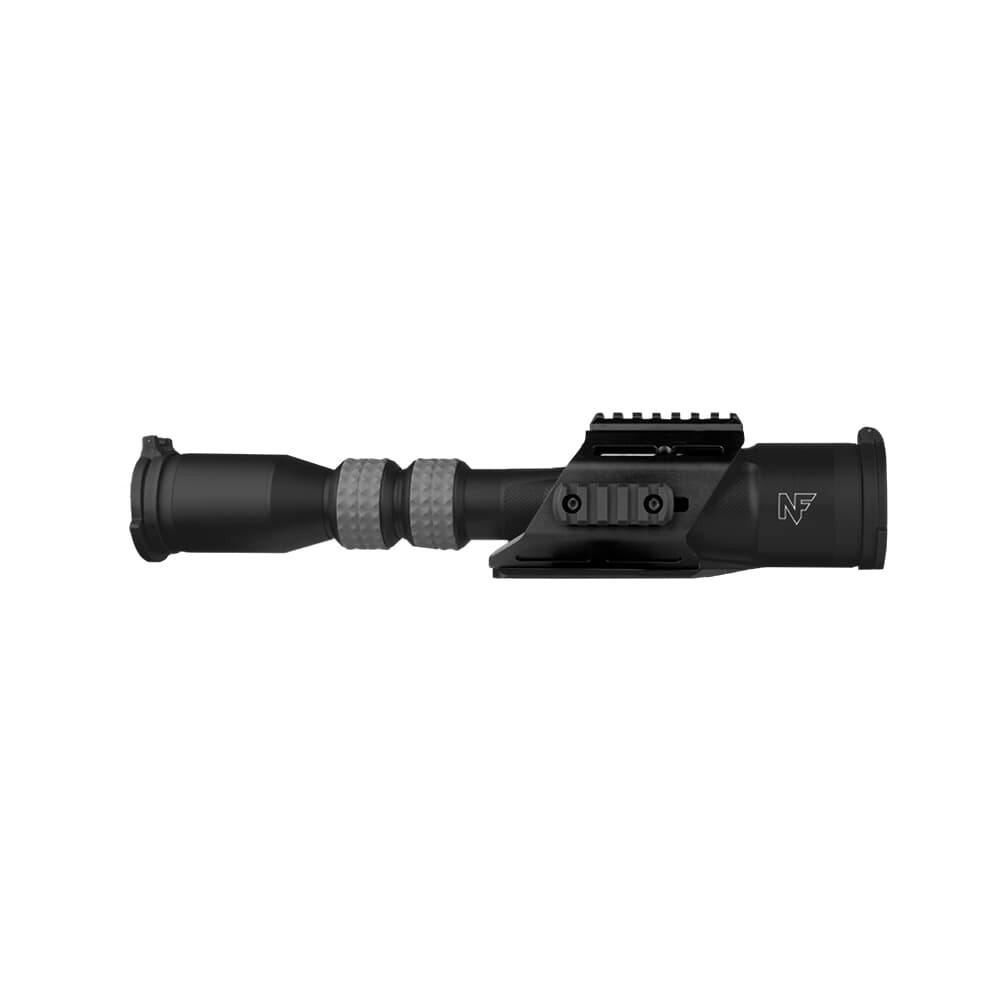
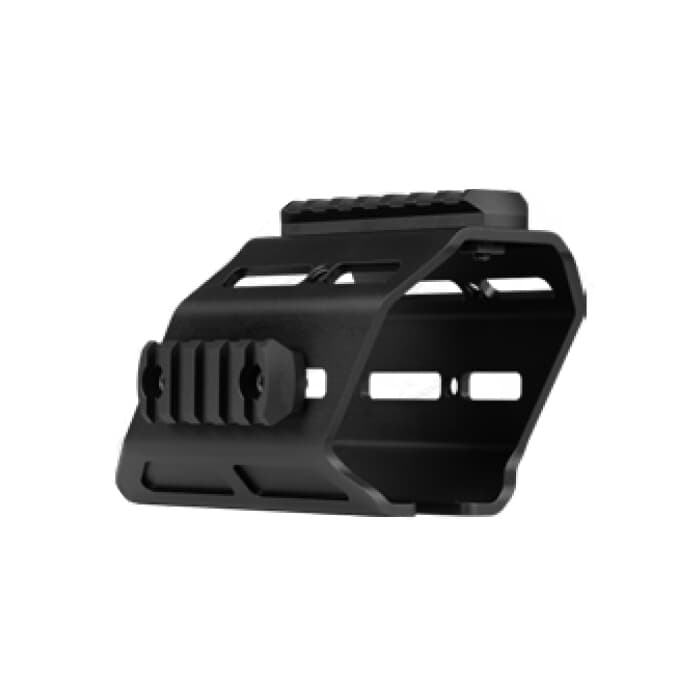
The “configurable” in the name comes from the accessory cage. It wraps the body and gives you Picatinny rail sections, M-LOK slots and 1/4-20 threaded holes. You can mount a laser rangefinder, a light, a red dot for fast target pickup, or a data card. The cage is low-profile and leaves room for running a cable to a wired remote.
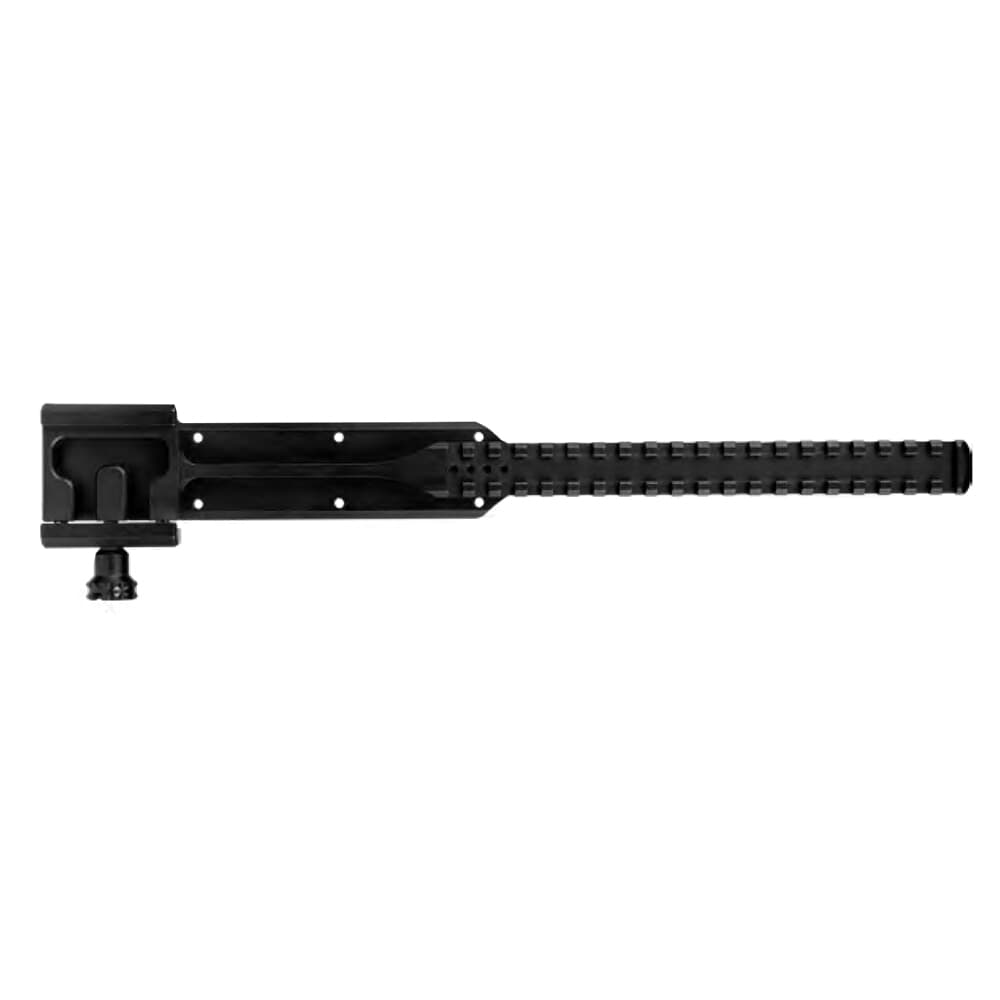
There’s also the s-RAP (Spotting Scope Rail Accessory Platform). It’s built for clip-on night vision and thermal devices, which turns the CFS into a night spotter.
How to Choose a Nightforce CFS Scope
Start with the reticle. Match it to the scope on your rifle, or to whatever your team runs. MIL and MOA shooters should stick to their own unit. TReMoR shooters will feel right at home with the TReMoR4.
Next, decide how you’ll use it. If you mostly glass from a tripod in daylight, the scope on its own is plenty, and it’s the lightest setup. If you’ll run a rangefinder, a red dot or night gear on it, the kit with the cage saves you from buying the cage separately. You can still add the cage or the s-RAP later to a scope-only CFS scope. Questions about setup? Ask our team.